


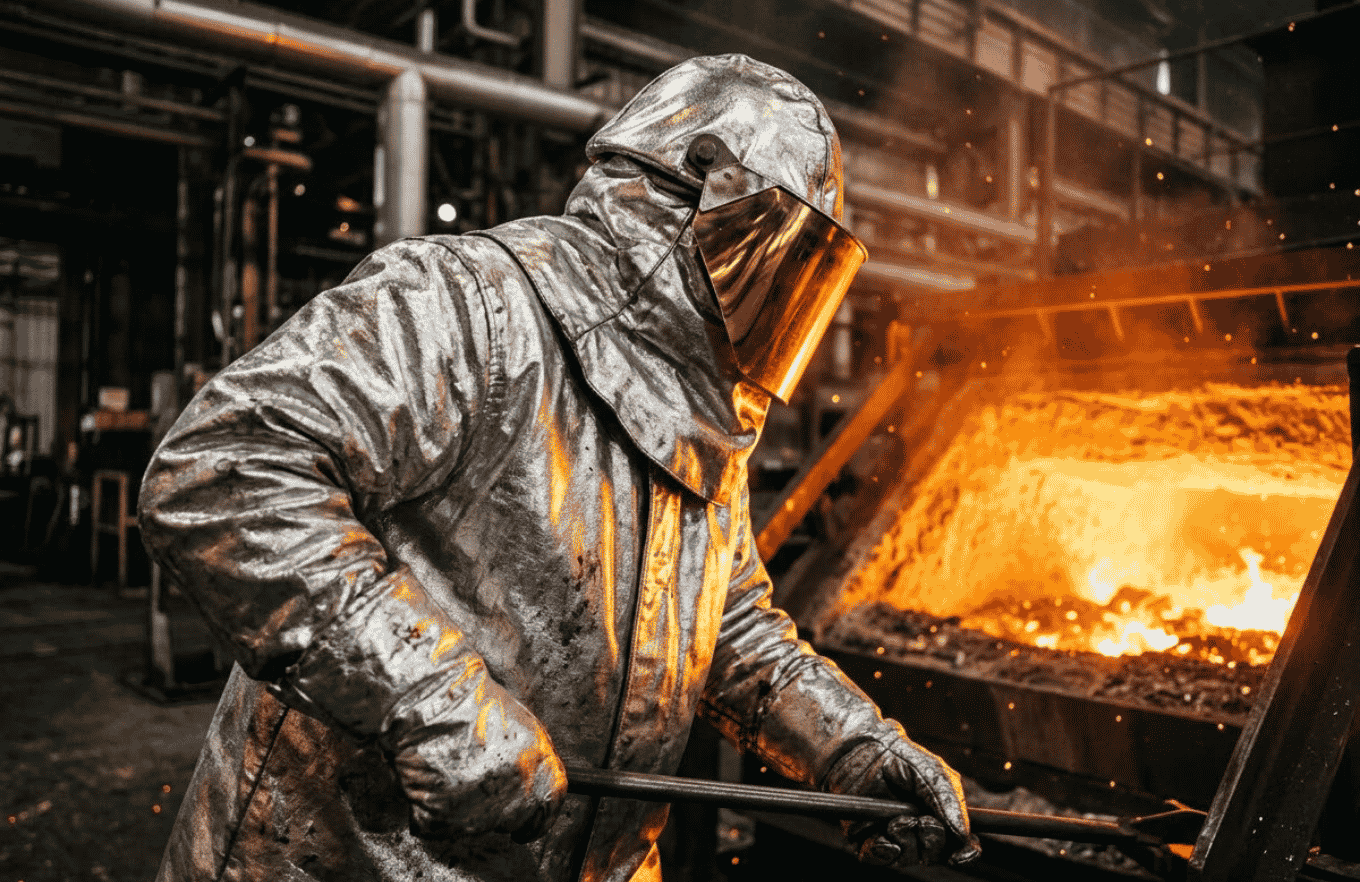
Explore how Molten Metal Protective Clothing supports heat safety with radiant heat resistance, splash protection, coverage, mobility, and comfort.
Extreme heat environments demand more than conventional protective garments. Foundries, metal processing plants, welding facilities, and high-temperature industrial operations can expose workers to intense radiant heat and molten metal splash. In such conditions, material performance, garment construction, coverage, and mobility all contribute to effective workplace protection.
For workers operating near furnaces, heated materials, or molten metal, Molten Metal Protective Clothing provides a specialized layer of protection for demanding applications. Aluminized surfaces help reflect radiant heat, while carefully designed garment construction supports coverage, mobility, and wearer comfort. However, effective protection against molten metal splash depends on tested material performance, garment design, and suitability for the specific workplace hazards.
Industrial heat exposure can involve several hazards at once. Furnaces and heated equipment create radiant heat, while casting, pouring, and metal handling can introduce molten metal splash risks.
Aluminized workwear uses a reflective outer surface to help reduce radiant heat exposure. However, protection should never be selected simply because a garment is described as heat resistant. The garment must be evaluated against the specific hazards, exposure levels, and tasks involved.
A worker positioned near a furnace may experience significant radiant heat, while a casting operator may face both radiant heat and molten metal splash. A suitable garment selection should consider:
● Heat intensity and exposure duration
● Potential molten metal splash
● Required body coverage
● Worker mobility and task demands
● Garment construction and durability
● Applicable protective clothing standards
This hazard-based approach helps businesses select garments according to actual working conditions rather than relying on general product descriptions.
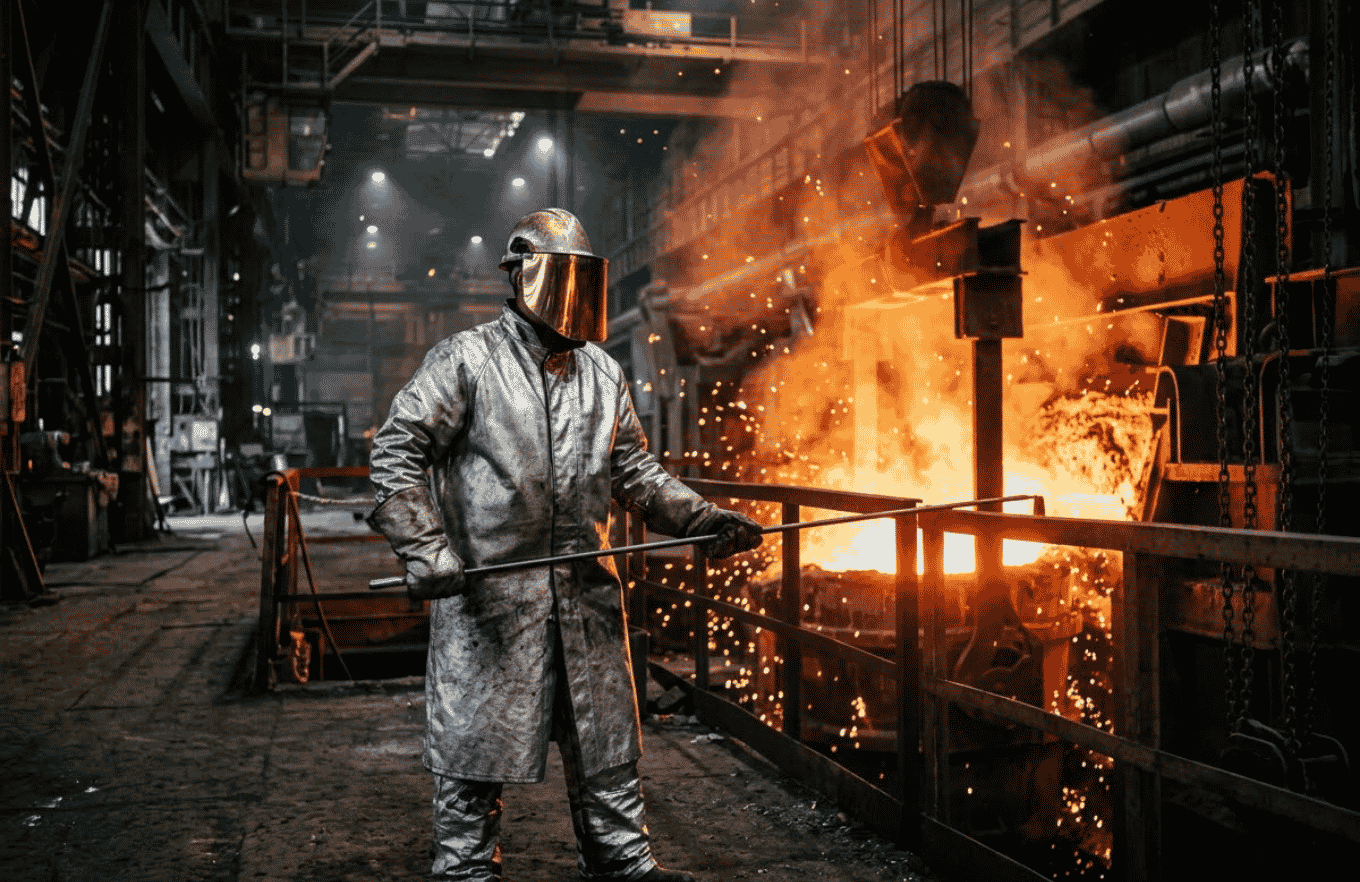
For demanding applications, Samad Workwear offers aluminized garments designed around radiant heat and molten metal hazards.
The Alu-Therm Pro Coat features an aluminized outer surface for radiant heat reflection, protection against aluminum and iron molten metal splash, an extended coat length, FR mesh ventilation at the back, a stand-up protective collar, concealed front closure with FR webbing, reinforced internal FR twill tape, angled utility pockets, bar-tack stitching, and an extended back panel with utility pocket. It complies with EN ISO 11611, ASTM F1939, and ASTM F955.
The Aluvent Pro Trouser provides coordinated lower-body coverage with an aluminized surface, aluminum and iron molten metal splash protection, a straight-leg industrial fit, lightweight construction, ergonomic patterning, abrasion-resistant construction, a clean waistband finish, and high-performance FR Kevlar thread. It is also supported by EN ISO 11611, ASTM F1939, and ASTM F955.
When selected and assessed appropriately, these garments can form part of an integrated protective clothing system for workers exposed to radiant heat and molten metal hazards.
Protective clothing standards help procurement teams evaluate garments against defined performance requirements.
EN ISO 11611: Covers protective clothing for welding and related processes involving heat, flame, sparks, and molten metal.
ASTM F1939: Evaluates protective clothing performance against radiant heat under controlled laboratory conditions.
ASTM F955: Assesses materials for resistance to molten metal splash through controlled exposure testing.
ISO 9185: Provides test methods for assessing the resistance of protective clothing materials to molten metal splash.
Understanding these standards allows buyers to compare protective garments against specific workplace hazards rather than relying only on general heat-resistance claims.
● Foundries and Metal Casting
● Steel and Aluminum Processing
● Welding and Fabrication
● Industrial Maintenance
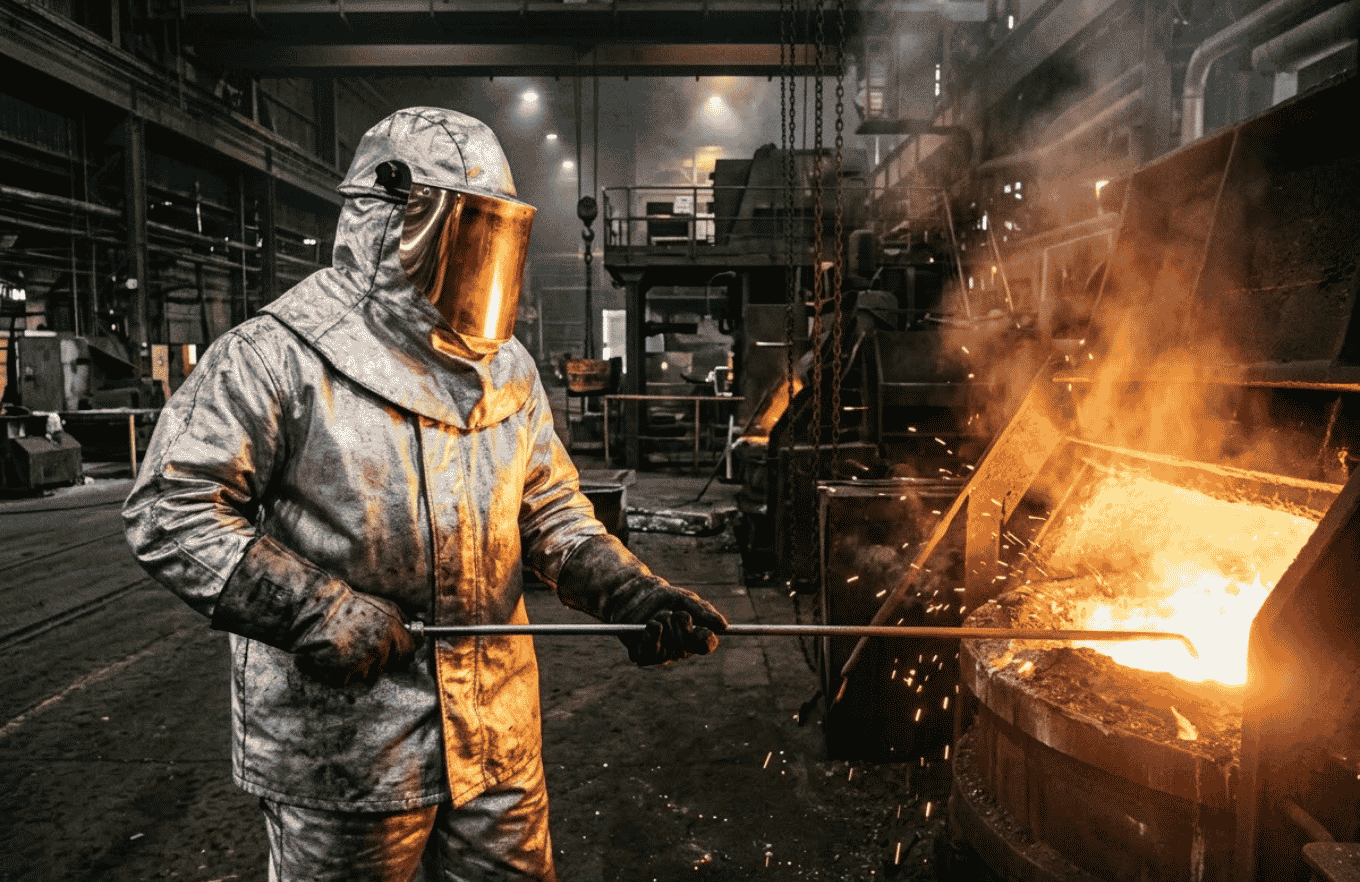
Selection should begin with a documented assessment of the working environment. Consider the heat source, exposure duration, splash potential, required coverage, and movement involved in each task.
Fit also matters. A garment can have appropriate protective characteristics yet become impractical if it restricts essential movement. Features such as ergonomic construction, ventilation, and manageable garment weight can improve usability during prolonged work.
Businesses should also assess how coats and trousers integrate with other PPE, including gloves, footwear, helmets, face protection, and task-specific equipment.
As an Industrial Protective Clothing Manufacturer, Samad Workwear focuses on garment construction, material selection, and practical design for demanding industrial applications.
Its aluminized range addresses upper- and lower-body requirements through features such as reflective surfaces, protective closures, reinforced stitching, ergonomic construction, and ventilation where appropriate. These details can make a meaningful difference when garments need to perform during real industrial tasks.
For procurement teams, defined specifications and applicable testing standards also provide clearer criteria for evaluating garments according to workplace requirements.
Effective protective clothing should support the worker without creating unnecessary restrictions. Industrial tasks may involve walking, bending, reaching, equipment operation, and material handling, making mobility an important consideration alongside protection.
Lightweight construction, ergonomic patterning, ventilation, and practical closures can contribute to everyday usability. Employers should ensure that selected garments reflect documented risks and that workers understand their correct use and care.
Specialized heat-protective garments require regular inspection. Organisations should check for damage, contamination, worn closures, compromised stitching, or other conditions that could affect continued use.
Following the manufacturer's care instructions is equally important. For procurement teams, choosing an Industrial Protective Clothing Manufacturer with clear product specifications and appropriate technical documentation can also support better PPE management over the garment's service life.
Planning specialized heat-protection workwear? Contact Samad Workwear to discuss aluminized garments, technical specifications, sampling, and bulk protective clothing solutions for your industry.
To cut it short, extreme heat environments require protective clothing selected around the hazards workers actually face. Aluminized surfaces, specialized construction, ergonomic features, and relevant standards can collectively support protection against radiant heat and molten metal splash.
By assessing workplace conditions carefully and choosing garments suited to specific applications, businesses can develop a more practical protective clothing strategy. Samad Workwear offers specialized aluminized options for industries where extreme heat and molten metal hazards are part of daily operations.
Molten Metal Protective Clothing is designed for industrial environments where workers may encounter molten metal splash and intense radiant heat during specific operations.
Flame-Resistant Workwear can form part of a protective clothing system for heat and flame hazards when the garment is selected according to the specific workplace exposure and applicable requirements.
Businesses should assess material specifications, garment construction, applicable standards, customization capabilities, technical documentation, and suitability for their specific industrial hazards.


