Learn how an Industrial Workwear Supplier helps businesses select durable work trousers with practical storage, flexibility, and job-ready construction.
Industrial work trousers need to do more than provide basic coverage. In construction, manufacturing, maintenance, and logistics, workers need garments that withstand repeated use, keep essential tools accessible, and allow comfortable movement throughout the shift. Poorly designed trousers can restrict mobility, wear prematurely, or make everyday tasks less convenient.
When choosing an Industrial Workwear Supplier, businesses should assess fabric durability, reinforcement, pocket placement, and ergonomic construction alongside fit. The right combination depends on working conditions, the tools employees carry, and the movements their roles require.
Industrial trousers should balance three practical requirements:
● Durability: Strong seams and reinforced panels help withstand repeated wear.
● Functional storage: Well-positioned pockets and tool loops keep essentials accessible.
● Mobility: Stretch panels and ergonomic patterning support bending, kneeling, and climbing.
These features should work together. Additional pockets offer little value if they obstruct movement, while flexible fabric alone cannot compensate for inadequate reinforcement in high-wear areas.
Samad Workwear offers two tactical cargo trouser options designed for different work requirements.
The Titanflex Tactical Cargo Pant features heavy-duty multi-panel construction, reinforced seat and thigh panels, Cordura knee reinforcement, ergonomic panel design, cargo pockets with secure flap closures, dedicated tool compartments, utility loops, reinforced attachments, and structured back pockets. Its construction focuses on durability and organized tool storage.
The Proflex Tactical Cargo Pant combines a slim ergonomic fit with multidirectional stretch panels, reinforced Cordura zones, articulated knees, multifunctional cargo pockets, tool loops, utility compartments, a secure zip pocket, reflective print detailing, reinforced back pockets, and double-stitched seams. Its design prioritizes flexibility alongside practical storage.
Both products comply with EN ISO 13688, which specifies general requirements for protective clothing.
EN ISO 13688 covers general requirements such as ergonomics, innocuousness, sizing, marking, and manufacturer information. It does not independently certify protection against every workplace hazard. Businesses should check whether additional standards apply to their specific working conditions.
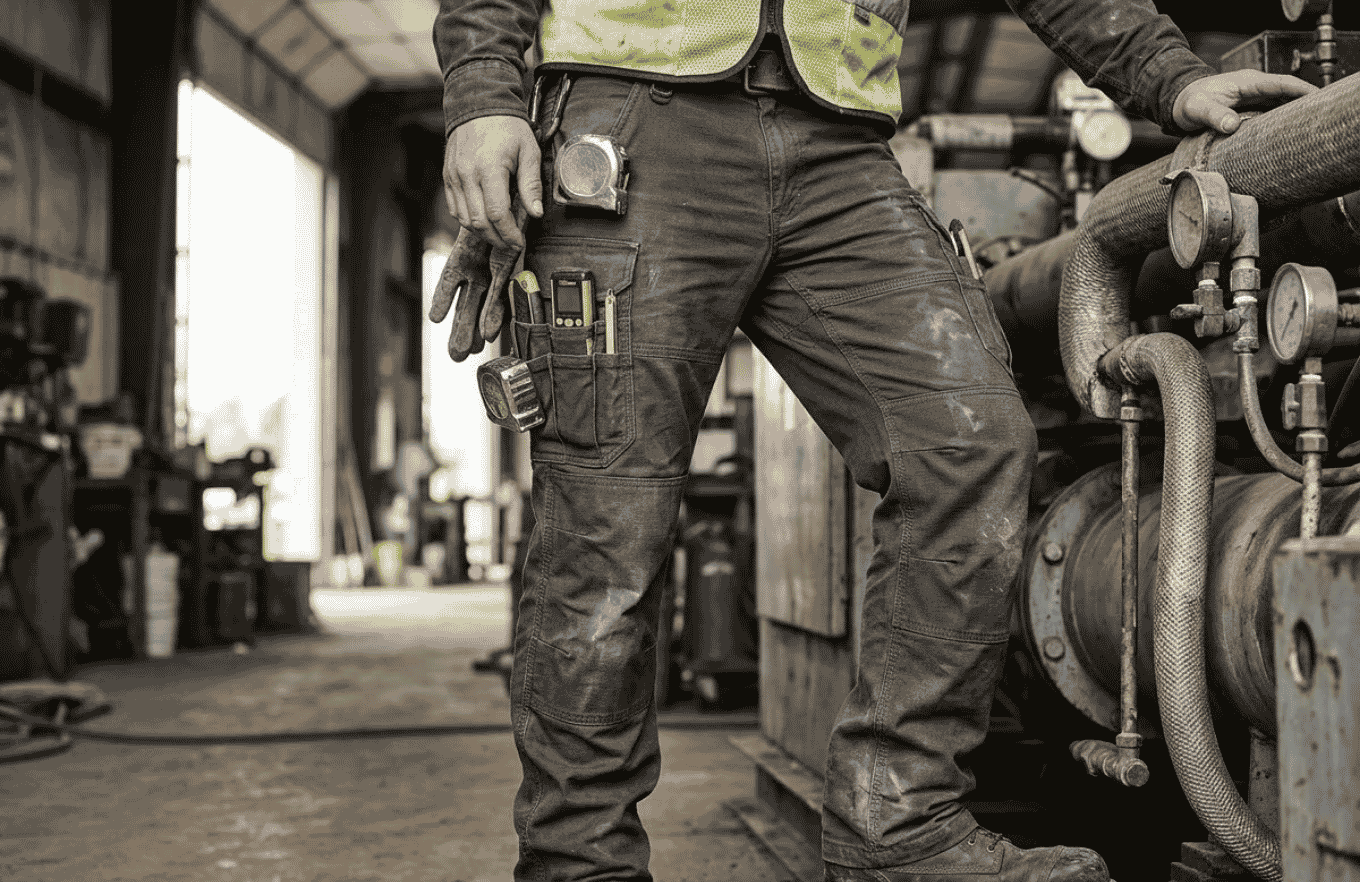
Workers may carry measuring instruments, fasteners, maintenance accessories, and other frequently used equipment. Poorly positioned pockets can make these items difficult to reach or uncomfortable to carry during movement.
When evaluating trousers from a Protective Clothing Manufacturer, consider the tools employees use and how they access them throughout the day. Cargo pockets provide space for larger items, while secure zip pockets help retain smaller essentials. Reinforced pockets and attachment points can also support repeated use.
More pockets do not necessarily mean better functionality. Maintenance technicians may need separate compartments for small tools, while construction teams may prioritize easy access and secure storage during climbing or kneeling.
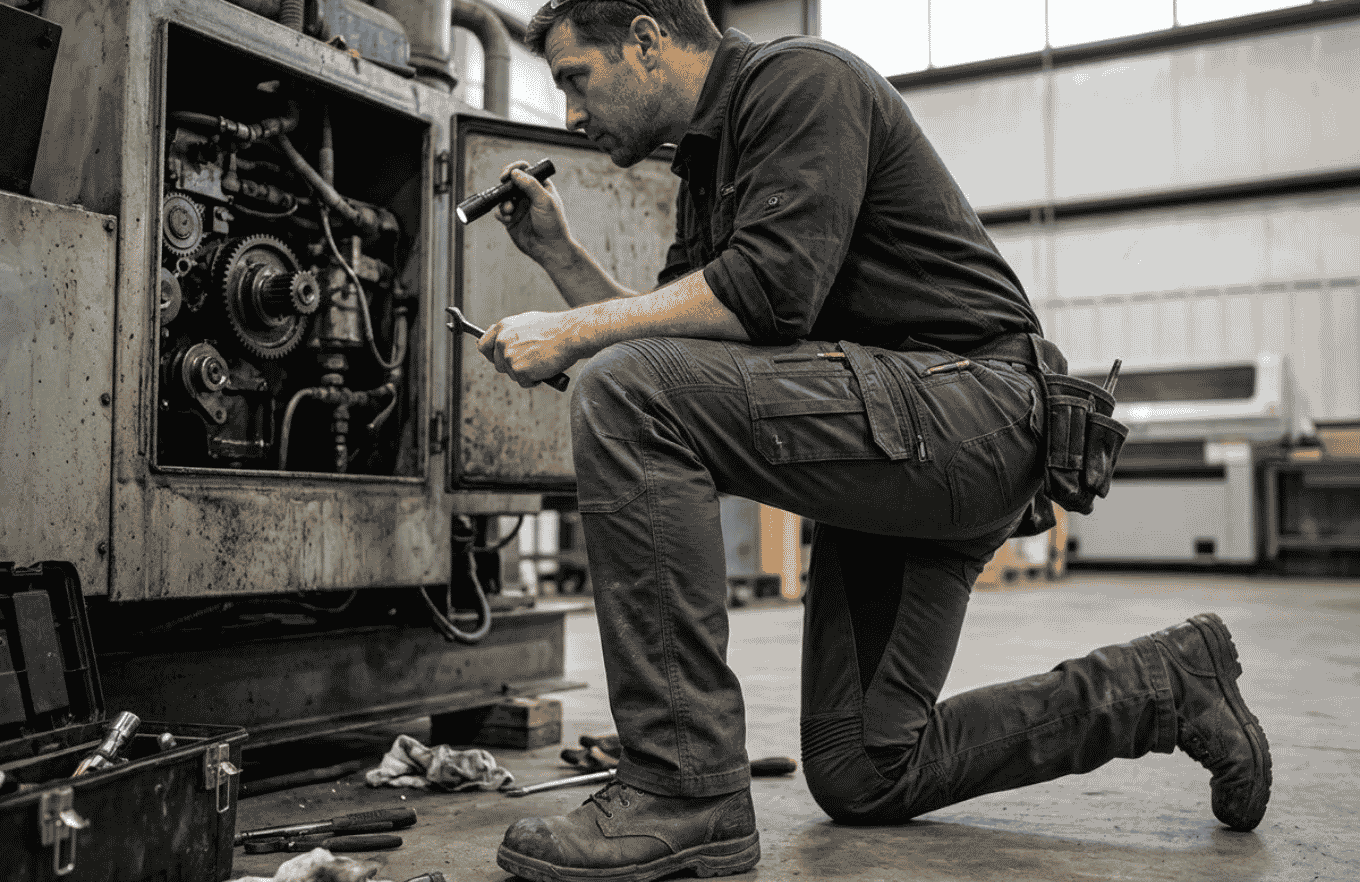
Work trousers must accommodate natural movement without placing unnecessary strain on seams or restricting access to equipment. Stretch panels can support bending and climbing, while articulated knees help garments accommodate different working positions.
A capable Safety Garment Manufacturer considers how fabric placement, pattern design, and reinforcement work together. Flexible materials can improve mobility, but high-abrasion areas still require suitable construction for the intended application.
The goal is to balance movement with durability. Well-designed trousers can reduce the need for constant adjustments and help workers carry out routine tasks more comfortably.
Different working environments place different demands on garment design.
● Construction and infrastructure: Reinforced areas and accessible tool storage support physically demanding tasks.
● Manufacturing and assembly: Durable seams, comfortable fits, and practical pockets suit repetitive activities.
● Maintenance and engineering: Dedicated compartments and secure pockets help organize tools and accessories.
● Warehousing and logistics: Flexible construction and durable materials support regular movement and material handling.
Businesses should match garment features to actual job requirements rather than selecting one design for every role.
Before placing a workwear order, procurement teams should evaluate:
● Workplace conditions: Identify abrasion, kneeling, movement, and visibility requirements.
● Fabric and reinforcement: Check whether high-wear areas receive appropriate reinforcement.
● Pocket configuration: Match storage to the tools employees carry.
● Fit and mobility: Assess comfort and movement during representative tasks.
● Standards and documentation: Confirm applicable requirements and request supporting product information.
These checks help businesses compare options according to operational needs rather than price or pocket count alone.
Samad Workwear offers tactical cargo trouser designs that address different workplace priorities, from heavy-duty reinforcement and structured storage to multidirectional stretch and articulated knee construction.
For bulk buyers, an experienced Industrial Workwear Supplier should also understand the importance of consistent specifications, suitable sizing, and documented product requirements. Evaluating these factors alongside garment features helps businesses identify options suited to their teams and working environments.
Looking for industrial work trousers that balance durability, storage, and mobility? Contact Samad Workwear to discuss your specifications, explore suitable designs, and plan workwear solutions for your team.
As this guide comes to an end, choosing the right industrial work trousers comes down to understanding the demands of the job and the needs of the people performing it. Durable fabrics, reinforced panels, practical tool storage, and ergonomic construction all contribute to workwear that supports everyday tasks. By comparing these features with workplace conditions and applicable standards, businesses can make more informed purchasing decisions. Samad Workwear offers tactical cargo trouser options designed around different operational priorities, helping businesses explore workwear solutions that balance durability, functionality, and flexibility.
Look for durable seams, reinforced high-wear areas, practical pockets, secure storage, ergonomic construction, and flexibility suited to daily tasks.
Stretch panels can support movement during bending, kneeling, and climbing, while articulated construction helps accommodate demanding working positions.
No. It covers general protective clothing requirements. Additional hazard-specific standards may be needed depending on the workplace risks.