
.webp)
.webp)
.webp)


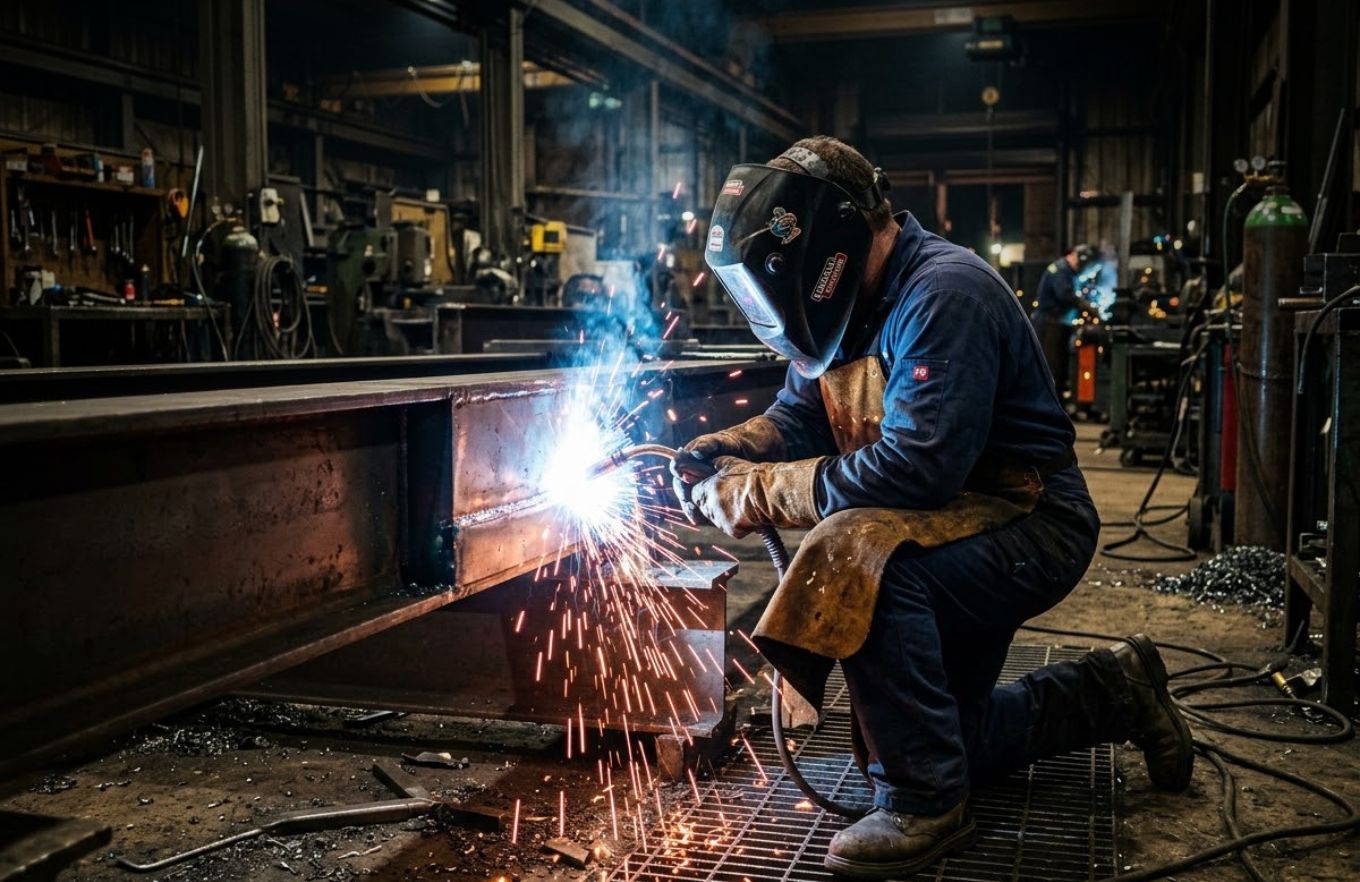
Learn how burns, open seams, contamination, failed closures and outdated specifications can indicate that welding protective clothing should be removed from service.
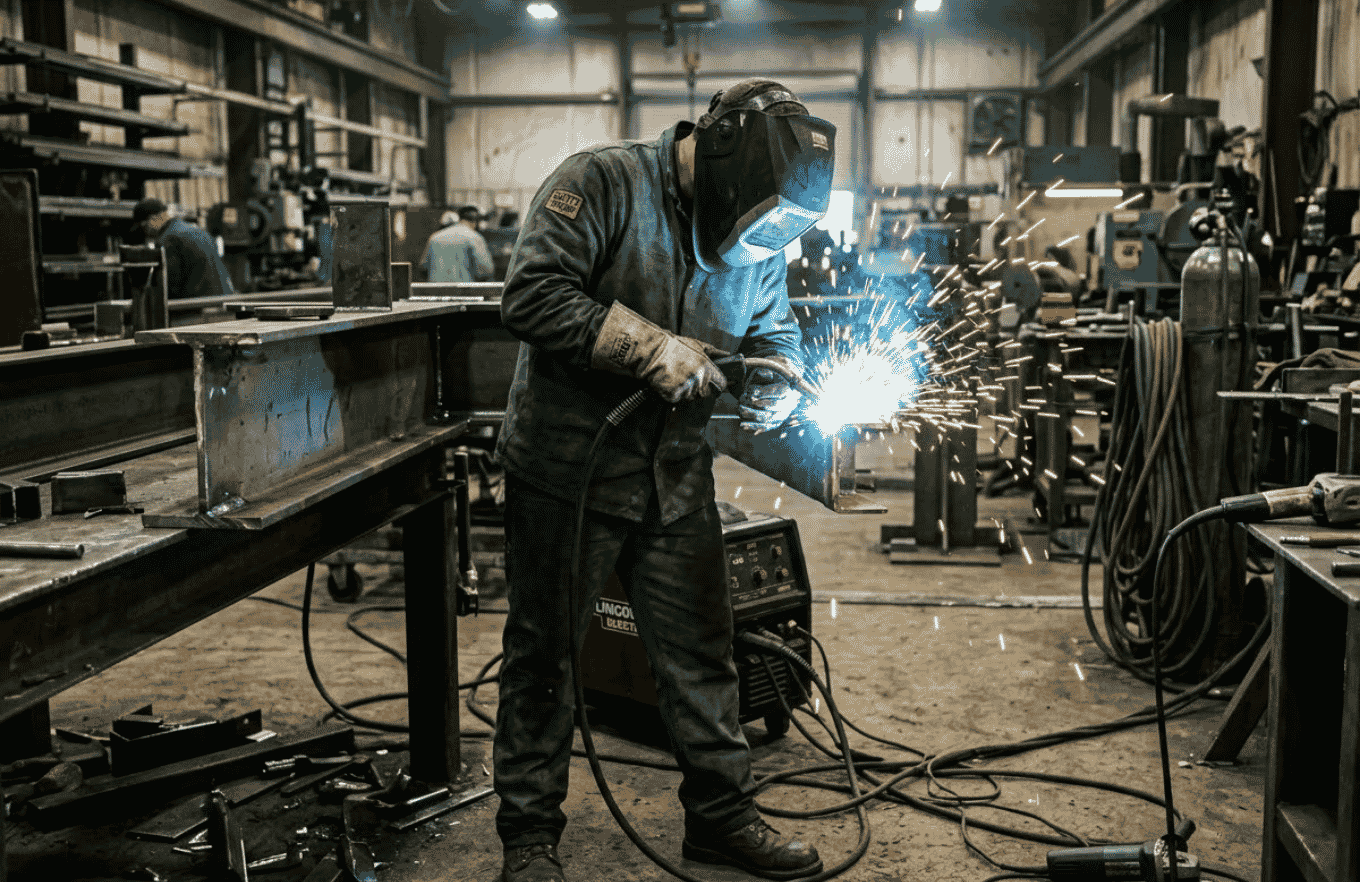
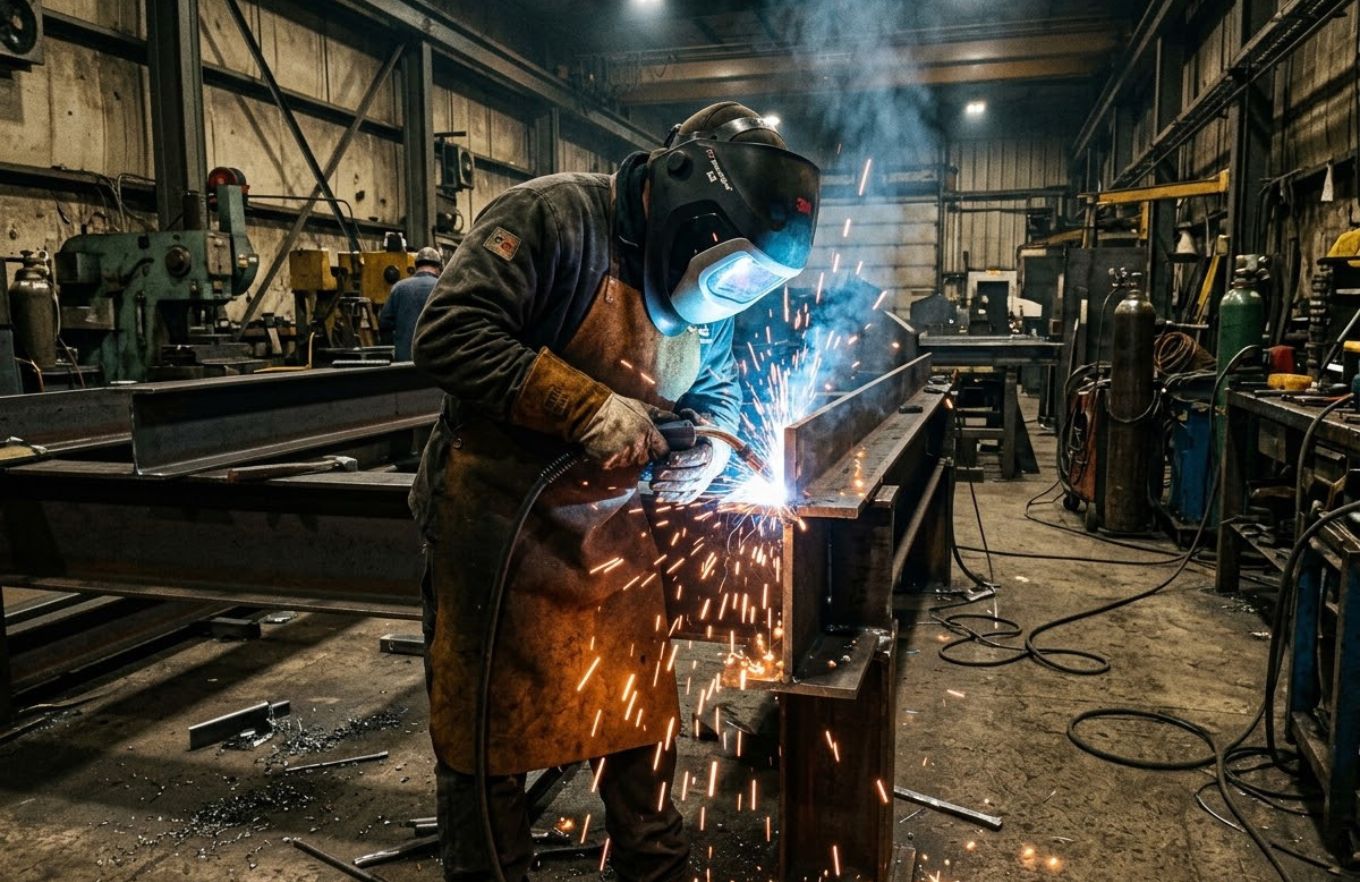
Welding exposes workers to sparks, small splashes of molten metal, radiant heat, flame, ultraviolet radiation and mechanical wear. Protective garments help reduce these risks, but their performance can be compromised by damage, contamination, failed components or incorrect care. Clothing should therefore be inspected before each use and managed according to the manufacturer’s instructions and the employer’s PPE program.
When a defect is found, the safest action is to remove the garment from service and have it assessed by an authorized person. Depending on the damage and the manufacturer’s criteria, the garment may require an approved repair or complete replacement. This guide explains five warning signs that welding protective clothing may no longer provide the protection required for the task.
Welding clothing is part of a broader PPE system and does not replace suitable gloves, footwear, eye and face protection, hearing protection or respiratory protection where those controls are required. Even a well-made apron, jacket or pair of chaps can become unsuitable if openings expose the body, contaminants can ignite, or its design no longer matches the welding process.
A documented inspection process helps supervisors identify problems early, separate affected garments from service and decide whether repair or replacement is appropriate. Inspection criteria should reflect the garment manufacturer’s instructions, the applicable standard and the actual hazards of the job.
Visible physical damage is the clearest warning sign. Holes, open tears, cracked leather, severe abrasion, thinning fabric or damaged reinforcement can expose skin or underlying clothing to sparks, spatter and heat.
Inspect the chest, sleeves, lap, thighs, knees, shins, cuffs and other areas that face the welding operation or contact work surfaces. Do not assume that a small hole is harmless; movement and repeated exposure can make the opening larger.
· Burn-through, holes or torn fabric
· Cracked, brittle or severely abraded leather
· Thin, glazed or worn areas with reduced coverage
· Damaged bibs, sleeves, cuffs or reinforcement panels
Remove the garment from service and follow the manufacturer’s criteria for assessment, approved repair or replacement.
Protective performance depends on the complete garment—not only the main fabric or leather. Open seams, broken stitching and failed closures can create gaps or allow panels to separate during work.
· Frayed or broken thread at stress points
· Open seam sections or separated reinforcement panels
· Damaged leather-to-fabric attachment areas
· Broken snaps, buckles, straps, fasteners or attachment points
· Closures that no longer remain secure during normal movement
Repairs should use compatible materials and approved construction methods. Ordinary thread, patches or alterations may not preserve the garment’s required protective performance.
A garment can look structurally sound and still be unsafe because of contamination. Oil, grease, fuel, solvent, paint or other flammable substances may ignite or continue burning, undermining the purpose of flame-resistant or welding protective clothing.
Contaminated clothing should be removed from service. Clean it only according to the manufacturer’s care instructions and the approved laundering process. If the contaminant cannot be removed, its identity is unknown, or cleaning has damaged the garment, replacement may be necessary.
· Persistent oily or chemical odours
· Visible grease, fuel, paint or solvent residues
· Heavy buildup of metal particles, dirt or combustible material
· Unauthorised washing, bleaching, dry cleaning or chemical treatment
A garment may need to be removed from service when it no longer fits securely or allows the worker to perform the task safely. Shrinkage, stiffness, deformation, damaged adjustments or an incorrect size can reduce coverage and cause the wearer to reposition or remove the PPE.
· Sleeves, bibs or leg panels no longer cover the intended body areas
· Stiff or deformed leather restricts safe movement
· Straps and adjustment systems cannot maintain a secure fit
· The garment interferes with gloves, footwear, helmet or other PPE
· Weight from contamination or absorbed material causes discomfort or instability
Comfort alone does not determine protective performance, but poor fit and restricted movement can indicate deterioration, incorrect sizing or incompatibility that must be corrected.
Protective clothing can remain physically intact yet be unsuitable for the work. A change in welding technique, amperage, spatter level, working position, surrounding hazards or customer requirements may demand a different garment design or performance class.
EN ISO 11611 specifies requirements for protective clothing used in welding and allied processes, including two risk levels. Class 1 is intended for less hazardous welding techniques and situations, while Class 2 addresses higher levels of spatter and radiant heat. Selection should be based on the welding process and risk assessment-not on the assumption that one class suits every task.
Before relying on a compliance claim, confirm that the test report or certificate covers the exact finished garment, material combination, seams, closures and design. A fabric test alone does not automatically establish certification of the finished product. The standard edition stated in marketing and labels should match the valid documentation for that garment.
· Inspect the garment before each use in good lighting.
· Check the outer surface, inner surface, seams, closures and high-exposure areas.
· Look for contamination, heat damage, shrinkage, stiffness and unauthorised alterations.
· Remove questionable garments from service and clearly identify them to prevent reuse.
· Record the defect and have an authorized person decide whether approved repair or replacement is required.
· After repair or cleaning, confirm that the garment still meets the manufacturer’s return-to-service criteria.
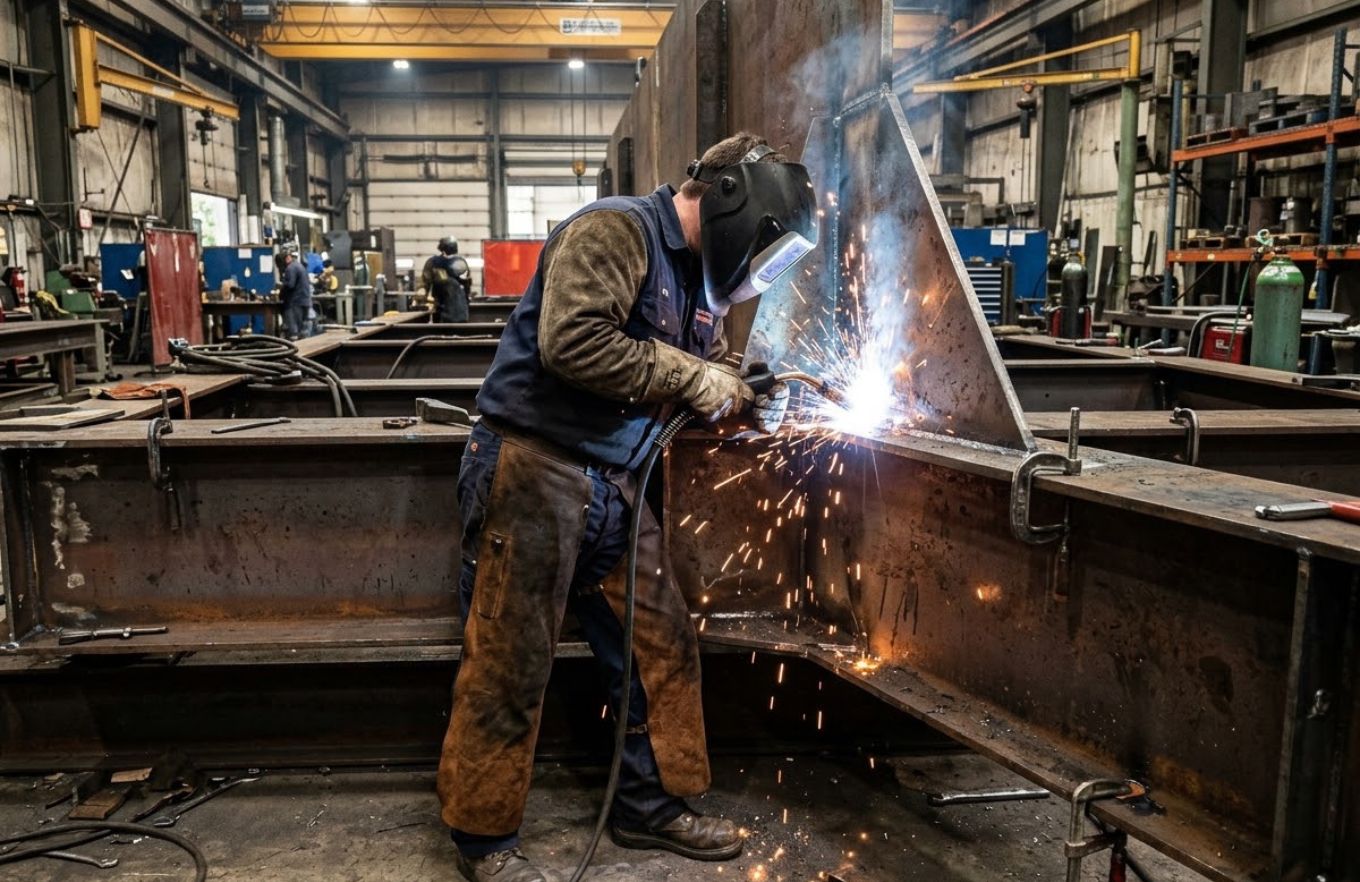
Replacement should begin with the current hazard assessment rather than simply reordering the previous garment. Buyers should evaluate:
· The welding process, working position, heat and spatter exposure
· Required body coverage and compatibility with other PPE
· Applicable standard, class and destination-market requirements
· Material type, thickness, weight, flexibility and breathability
· Seam construction, closures, adjustment points and reinforcement
· Care instructions, inspection criteria, repair policy and traceability
· Test reports or certificates that apply to the exact finished garment
Samad Workwear develops textile, leather and hybrid welding garments for fabrication, heavy engineering, shipbuilding, steel, construction, automotive production and industrial maintenance. Product specifications should be finalized according to the customer’s hazard assessment, required standard and approved sample.
The 18089 chaps use a hybrid construction intended to combine front-area durability with greater flexibility and ventilation at the back. An example configuration includes 440 GSM FR cotton satin with approximately 1.3 mm grain-leather reinforcement panels, adjustable waist components and reinforced seams. Final material, design and compliance details should be confirmed in the approved technical specification and supporting documents.
The 18024 apron provides front-body coverage for welding and related hot-work tasks. An example configuration uses approximately 1.0–1.5 mm split leather, a full bib, adjustable neck and waist components, and reinforced attachment points. The applicable EN ISO 11611 class must be stated only when it is supported by documentation for the exact finished apron and configuration.
As a safety garment manufacturer, Samad Workwear supports material selection, garment engineering, sampling, reinforced construction, manufacturing and quality control for welding apparel. We work with buyers to define the intended use, required specifications, sizing, branding and documentation before bulk production.
This development-led approach helps organizations source task-appropriate welding garments instead of treating every apron, jacket or pair of chaps as interchangeable. Compliance claims should always be verified against the documents supplied for the selected finished product.
Businesses can contact Samad Workwear to discuss technical specifications, product development, sampling and bulk manufacturing requirements.
Burns, open seams, failed closures, flammable contamination, poor fit and outdated specifications are reasons to remove welding clothing from service. An authorized assessment should determine whether approved repair, specialist cleaning or replacement is appropriate.
Replacement decisions should reflect the current hazard, required coverage, applicable standard and verified documentation. Regular inspection supports reliable protection throughout the garment’s service life.
It should be inspected before each use and as required by the employer’s PPE program and the garment manufacturer’s instructions.
Not necessarily, but the garment should be removed from service and assessed. Only an approved repair that preserves the required protective performance should be accepted.
Only when the contaminant can be safely removed using the approved care process and the garment remains within the manufacturer’s return-to-service criteria. Otherwise, replacement may be required.
It specifies requirements for protective clothing used in welding and allied processes, including protection against hazards such as spatter, short flame contact and radiant heat. It does not replace separate hand, foot, eye, face or respiratory protection.